
Blog

From Design to Code: My Personal Frontend Workflow
A behind-the-scenes look at my personal workflow for going from a Figma design file to a fully built, pixel-perfect, and responsive Next.js component.
Every developer has their own workflow, and mine has been refined over years of building production projects. Here is my personal process for taking a design from Figma to a fully interactive, production-ready React/Next.js component.
Step 1: Study the Design
Before writing a single line of code, I spend time analyzing the entire design. I identify reusable patterns, understand the spacing system and color tokens used, and plan my component hierarchy. Breaking down the layout into logical, nested boxes in my head saves significant time during implementation.
Step 2: Set Up the Design System
I start with the global CSS (or Tailwind config) to establish the design tokens: colors, fonts, spacing scales, and border radii. Getting these right from the start ensures consistency throughout the entire project without needing to override styles later.
Step 3: Build Bottom-Up
I start with the smallest, most generic components (buttons, inputs, badges) and work my way up to full layouts. This bottom-up approach ensures every block is reusable and well-tested before being composed into larger, more complex structures.
Following this workflow consistently has helped me deliver projects faster, with fewer bugs, and with a cleaner, more maintainable codebase. The key is discipline and having a repeatable process you trust.
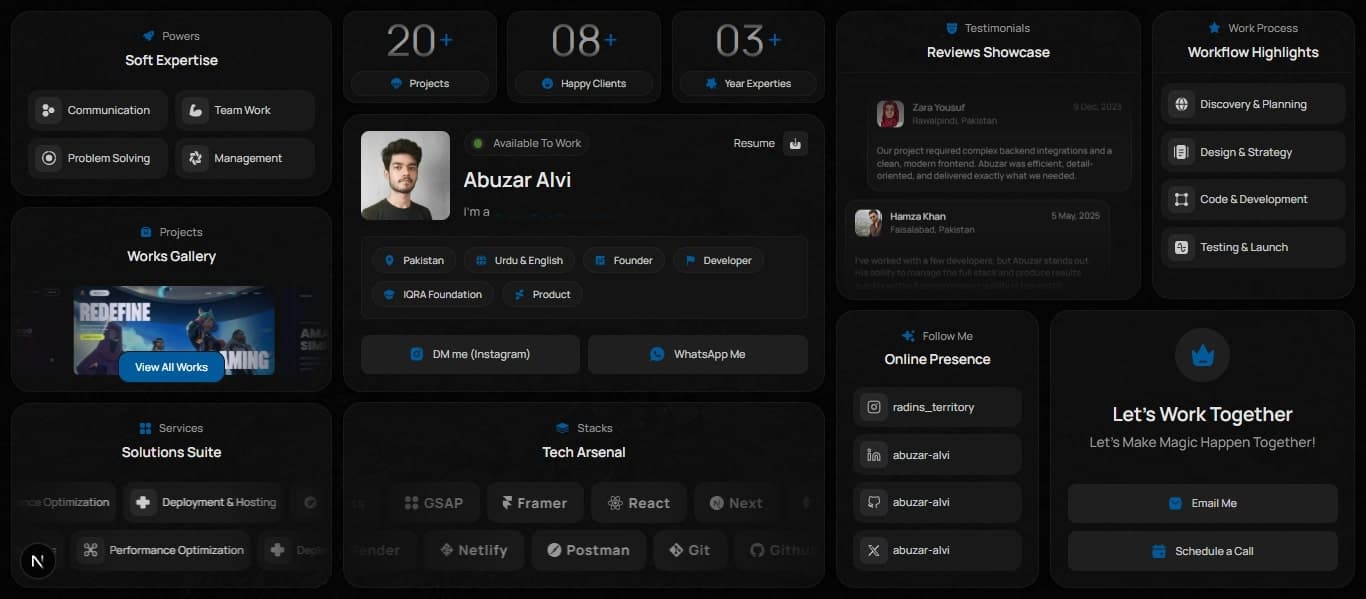
Abuzar Alvi
I am a passionate software engineer building scalable, modern web applications. When I'm not writing code, I love exploring the latest frontend technologies and sharing my knowledge through tutorials.

Discussion
Giscus Comments Placeholder
Comments are currently disabled. To enable them, set up GitHub Discussions on your repository and replace the placeholders in components/BlogComments.jsx.